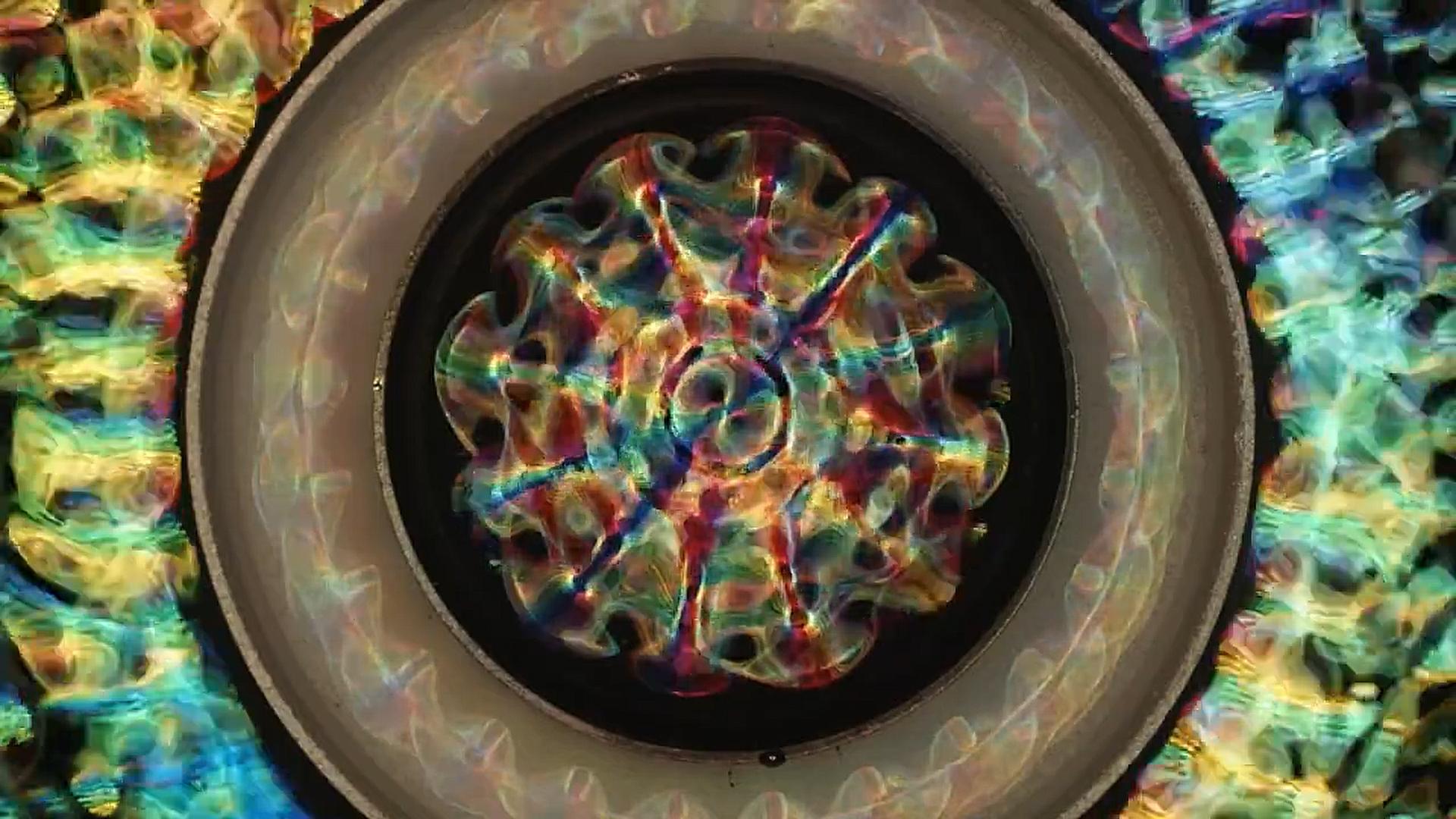
There are few experiences in sound culture as immediately arresting as a cymatic image: a pattern that seems to arrive fully formed, as if matter has suddenly remembered an underlying geometry. A tone is introduced; sand, salt, powder, paste, or water reorganises; and a crisp figure appears, sometimes austere and mathematical, sometimes floral, sometimes uncannily "alive." The wonder is genuine: cymatics offers a rare moment where vibration steps out of abstraction and becomes visible.
In documentable terms, cymatics refers to a family of experiments that make vibrational modes visible. When a surface or volume is driven at particular frequencies, it supports standing-wave patterns (normal modes). In the classic "Chladni plate" experiment, particles migrate away from regions of strong motion and gather along nodal lines (regions of minimal displacement), revealing the mode shape as a stable geometry. Museum and institutional descriptions of Chladni plates frame them precisely this way: a repeatable demonstration that links resonance, frequency, and form. (Science Museum Group Collection)
This is already enough to explain why cymatics matters culturally: it shows that pattern can be an emergent property of constraint, resonance, and energy flow. Not "sound creates matter from nothing," but: when a medium is energised in a stable way, matter often self-sorts into order.
Historical thread: from observation to Chladni's method
It is tempting to name a single "inventor" of cymatics. Historically, the truth is simpler and more compelling: the phenomenon is old in principle (anything that vibrates has modes), but it became widely legible when someone developed a technique that was systematic, repeatable, and shareable.
Before Chladni, there are scattered earlier notices, curiosities at the edge of notebooks. What Chladni did differently was to turn this into a method. His 1787 work made nodal-line patterns demonstrable on demand: sprinkle sand on a plate, excite it (famously with a bow), and the sand arranges itself into characteristic figures. That approach became foundational for modern acoustics education because it makes resonance visible without requiring advanced mathematics. (Science Museum Group Collection)
From plates to water: the wider family of "visible vibration"
Chladni figures are only one branch of a much larger story. In the 19th century, Michael Faraday described pattern formation on liquid surfaces under periodic vibration, now known as Faraday waves (or Faraday instability). The modern literature treats this as a rigorous pattern-forming system in fluid mechanics: standing waves emerge when forcing exceeds a threshold and interacts with boundary conditions. (damtp.cam.ac.uk)
The "mystical" sensation often comes from encountering an orderly system that seems to generate endless variation like a snowflake, but governed by resonance and constraint instead of temperature and humidity.
Instrument craft and the luthier lineage
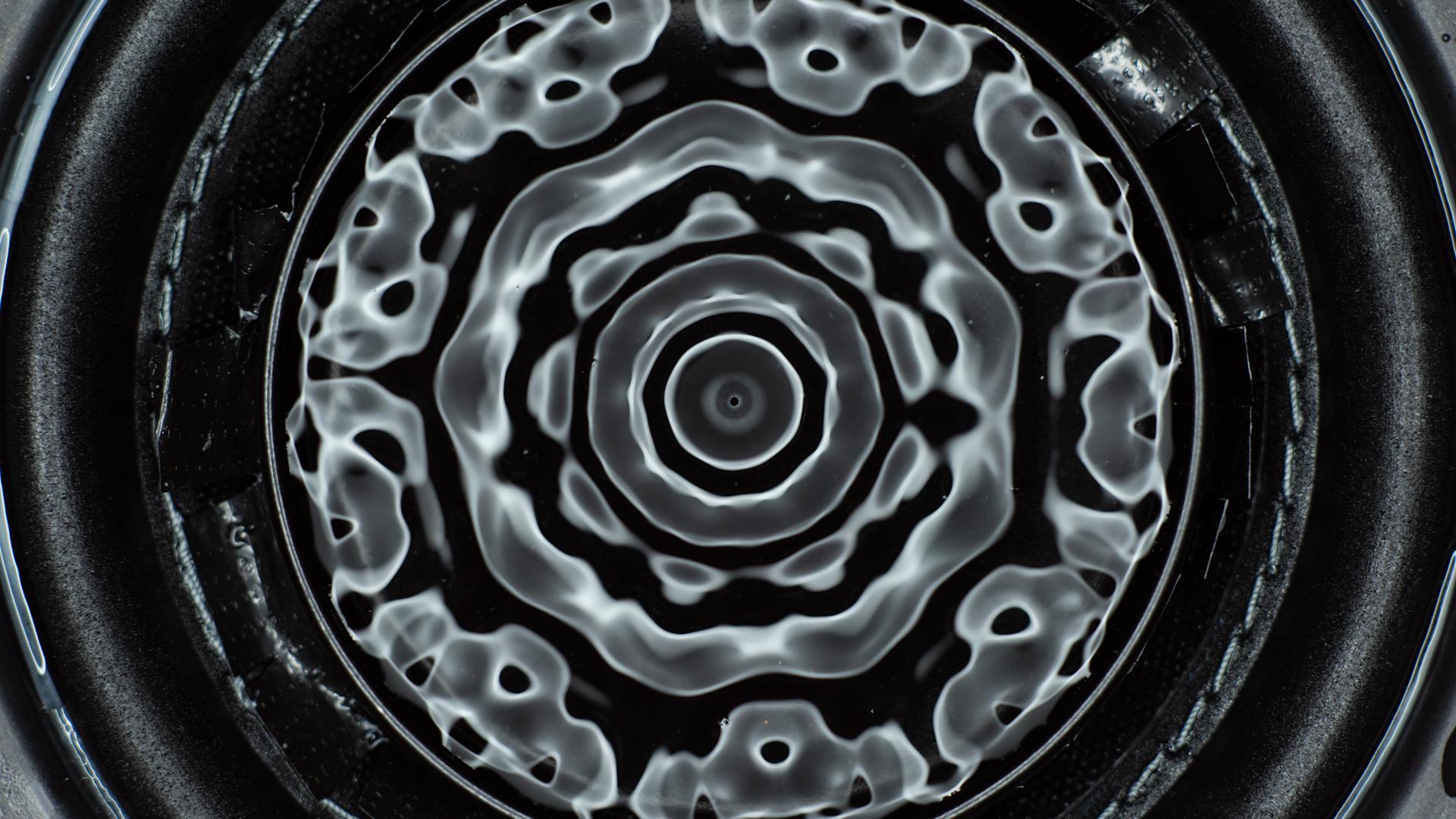
The verifiable claim is that Chladni-style mode visualisation has been used in instrument acoustics and plate work to study (and sometimes guide) vibrational behaviour. Contemporary educational and technical resources discuss Chladni patterns specifically in the context of guitar soundboards and plate modes. (phys.unsw.edu.au) Academic and semi-technical writing on violin acoustics also treats Chladni patterns and normal modes as a serious lens for understanding how plates and assembled bodies vibrate. (violinacoustics)
The careful interpretation is this: craft traditions have always negotiated resonance by ear and by feel; Chladni patterns provided a clear visual tool that later makers and acousticians could adopt, refine, and teach. That is already remarkable and it avoids unprovable claims about "secret ancient cymatics."
Hans Jenny: why cymatics became an icon rather than a classroom demonstration
If Chladni gave the world a technique, Hans Jenny gave the world a worldview-shaped image-bank. Hans Jenny (1904-1972) was a Swiss physician and natural scientist who coined the term "cymatics" for the study of wave phenomena as visible effects on matter. (Wikipedia) His biography is important to the way his work was received: he taught science at a Rudolf Steiner school in Zürich for several years before entering medical practice, which places him near anthroposophical intellectual culture without requiring us to treat his work as "occult science." (Wikipedia)
Publications and the shape of his project
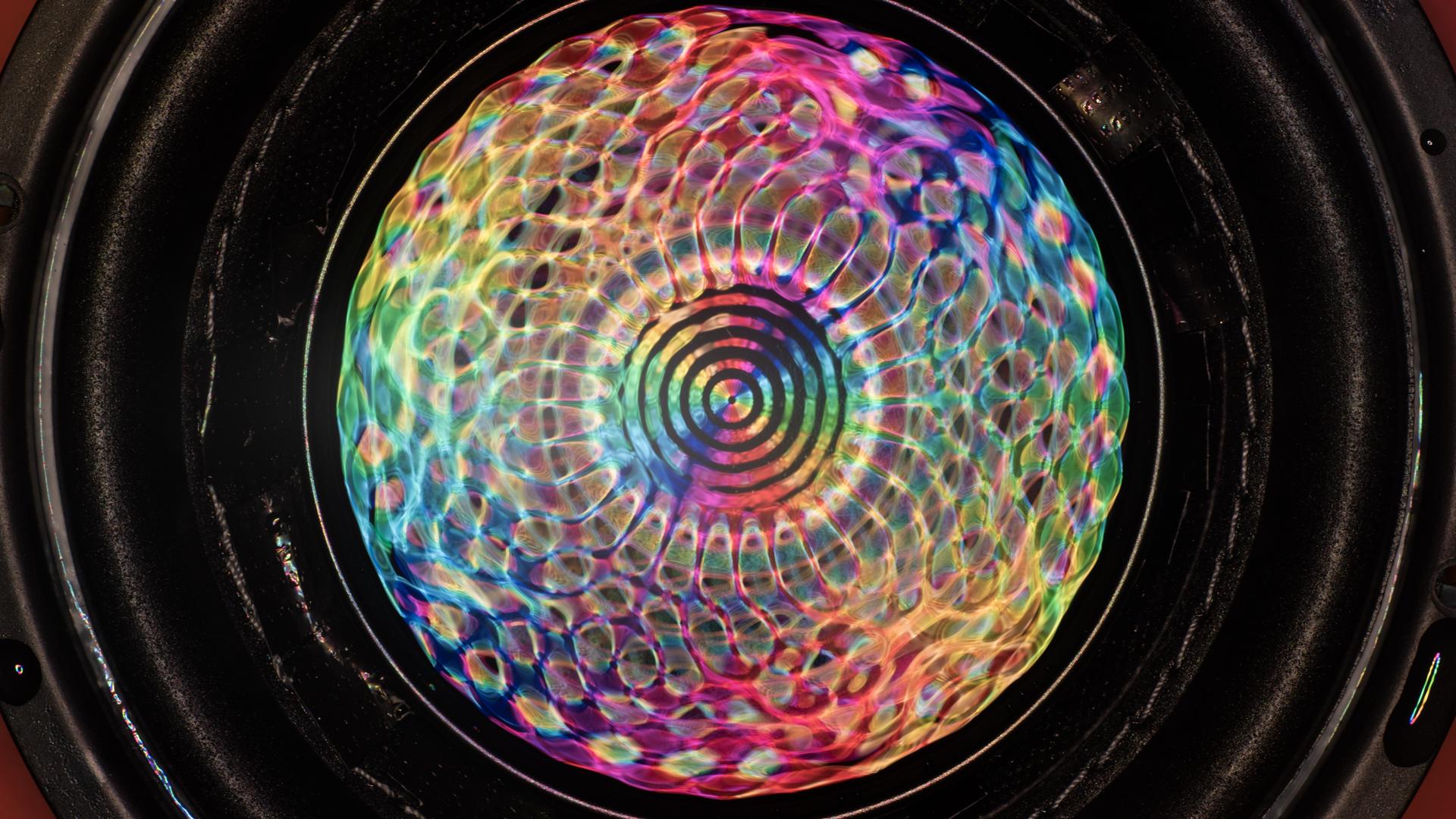
Jenny's central legacy is his two-volume photographic and observational project, first published in German as Kymatik / Cymatics: Volume 1 (1967) and a second volume produced around the end of his life and circulated in later editions (often dated 1972 in German contexts and 1974 in English editions). (Wikipedia)
What he actually did (method, apparatus, and discipline)
Jenny's experiments extended the Chladni idea beyond plates-with-sand into a wider set of materials; powders, pastes, fluids driven by controlled oscillation. Descriptions of his practice consistently emphasise two things: (1) he used electronic tone generation to control frequency, and (2) he documented transitions between stable forms as parameters changed, building an "atlas" of visible vibration rather than a single demonstration. (Wikipedia)
This is where his work becomes culturally potent. A single Chladni plate can look like a clever trick; Jenny's cumulative documentation suggests a world of lawful transformation, forms that shift, rotate, bifurcate, and re-stabilise as if the medium is exploring a grammar of pattern. Even a mainstream account from the period treated it as noteworthy science news: a New York Times piece from 1968 ("Science Vibrates to Make Pictures") is cited in multiple bibliographies discussing Jenny's work and reception. (digitalcollections.wesleyan.edu)
Why Jenny still matters for modern readers
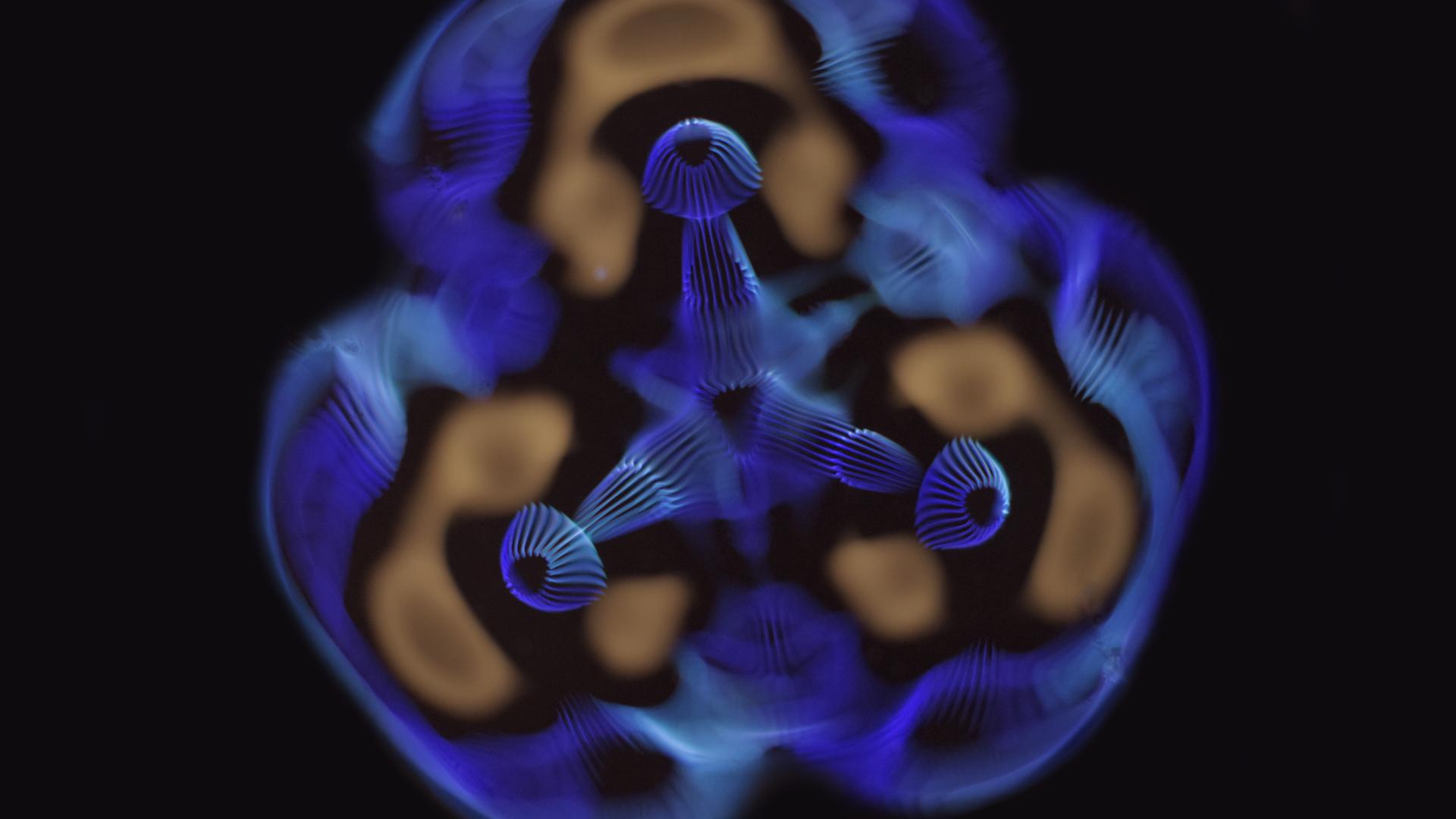
Jenny's influence persists because he provided an interface between disciplines: physics and morphology, laboratory technique and aesthetic perception, observation and meaning. That's also why his work keeps resurfacing in art and music contexts and why contemporary publishers continue to reissue it. Floris Books, for example, released an expanded edition (2024) edited by Jeff Volk, explicitly framing the work as foundational and adding new commentary around it, evidence that Jenny's project is still being treated as a serious cultural document, not merely a curiosity. (florisbooks.co.uk)
Alexander Lauterwasser: water as the modern "revelation medium"
If Jenny built an atlas, Alexander Lauterwasser made cymatics feel like a living art, especially by choosing water as the primary surface. Lauterwasser (born 1951) is widely described as a German researcher and photographer who has worked with cymatics since the 1990s. (florisbooks.co.uk) His German-language book Wasser Klang Bilder (2002) and its English edition Water Sound Images (published mid-2000s) are the core references for his approach: photographs of water surfaces set into motion by sound sources ranging from simple tones to complex musical material. (MIT Press Direct)
Lauterwasser's contribution is not "proving" anything new about physics; it's demonstrating how visually rich and emotionally resonant this domain becomes when the revealing medium is fluid, reflective, and temporally alive. The MIT Press / Leonardo review of Water Sound Images treats the book as a serious art-science publication: a substantial volume with a clear genealogy (Chladni → Jenny → contemporary image practice) and a distinct claim to aesthetic significance. (MIT Press Direct)
This is also where cymatics becomes especially compatible with modern ritual and wellness language. Water-pattern imagery easily reads as "animated mandala," not because water is mystical, but because the surface carries motion in a way a sand figure does not: it looks less like a diagram and more like a living field.
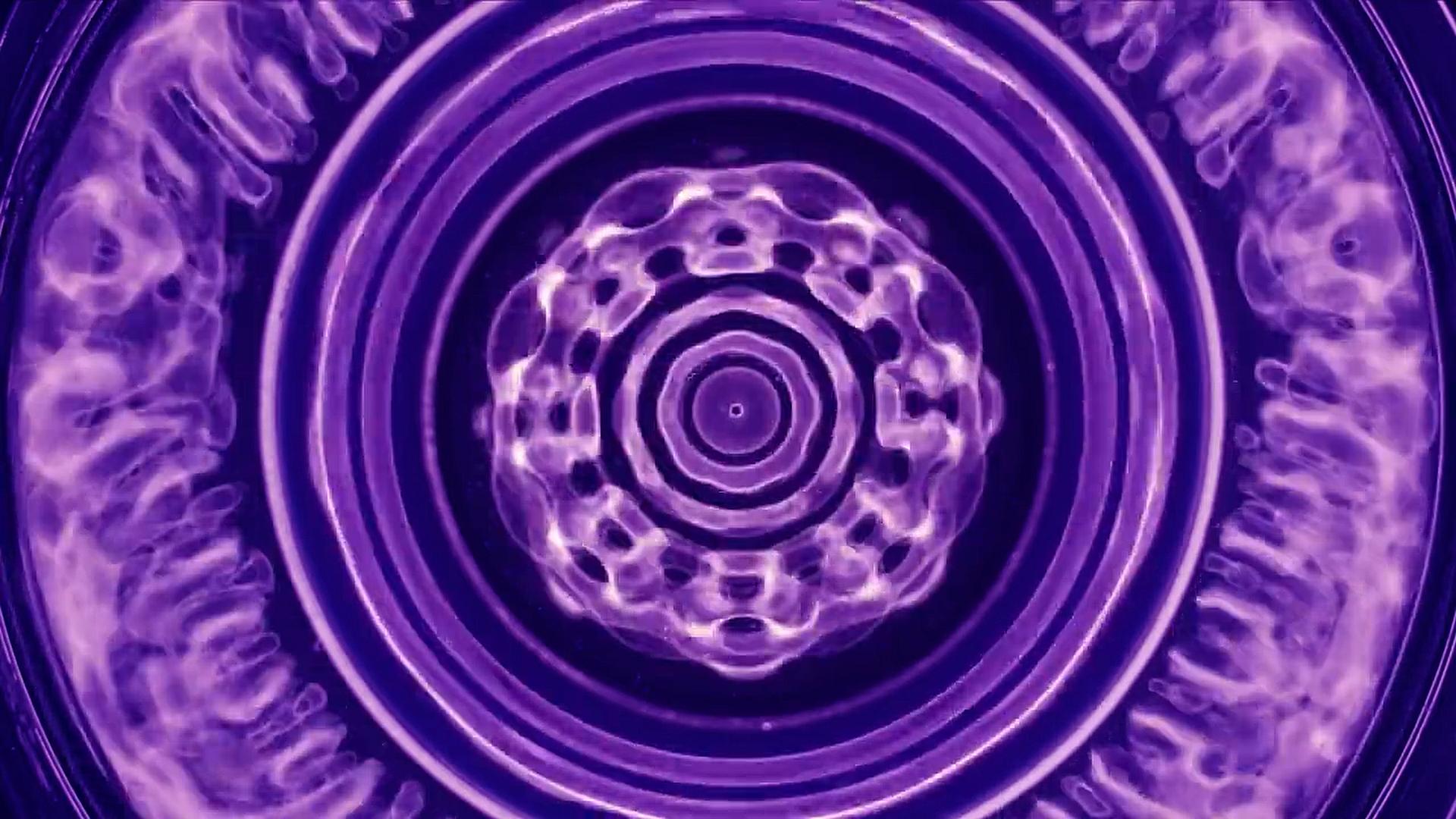
Cymatics, as a named practice, is largely modern. But the human appetite it feeds, relating sound to order and order to meaning is much older. Cymatics does not validate metaphysical claims but it offers a powerful analogue: when energy is organised and sustained, a medium can fall into coherent form.
Esoteric frame: vibration as ontology
What we can document is the mechanism: boundary conditions, resonance, normal modes, pattern formation. What we can also document is a modern esoteric interpretation: that vibration becomes a way of speaking about reality, about the relationship between invisible cause and visible form.
Hans Jenny's proximity to anthroposophical educational culture helps explain why his images were received not only as demonstrations but as symbols: they look like a hidden language of form. (Wikipedia) In contemporary Western esotericism (including popular Hermetic framings such as "the principle of vibration"), cymatic images often operate as icons for a worldview in which vibration is not merely physical but also metaphysical. The responsible stance for this paper is to explain that cultural logic clearly, while keeping claims anchored to what the evidence can bear.
Modern reinvention: contemporary "visible sound" culture
In the present day, cymatics lives in three overlapping environments:
Education and physics outreach: Chladni plates remain a staple demonstration because they make resonance instantly graspable. (Science Museum Group Collection)
Craft and instrument acoustics: Chladni patterns appear in lutherie-adjacent contexts (especially in discussions of plate modes) as a practical visualisation tool, including guitar-plate demonstrations and violin acoustics discourse. (phys.unsw.edu.au)
Art publishing and image culture: this is where Jenny and Lauterwasser sit at the centre, books that function as both documentation and aesthetic object. (florisbooks.co.uk)
A brief note on modern instruments for visualising sound
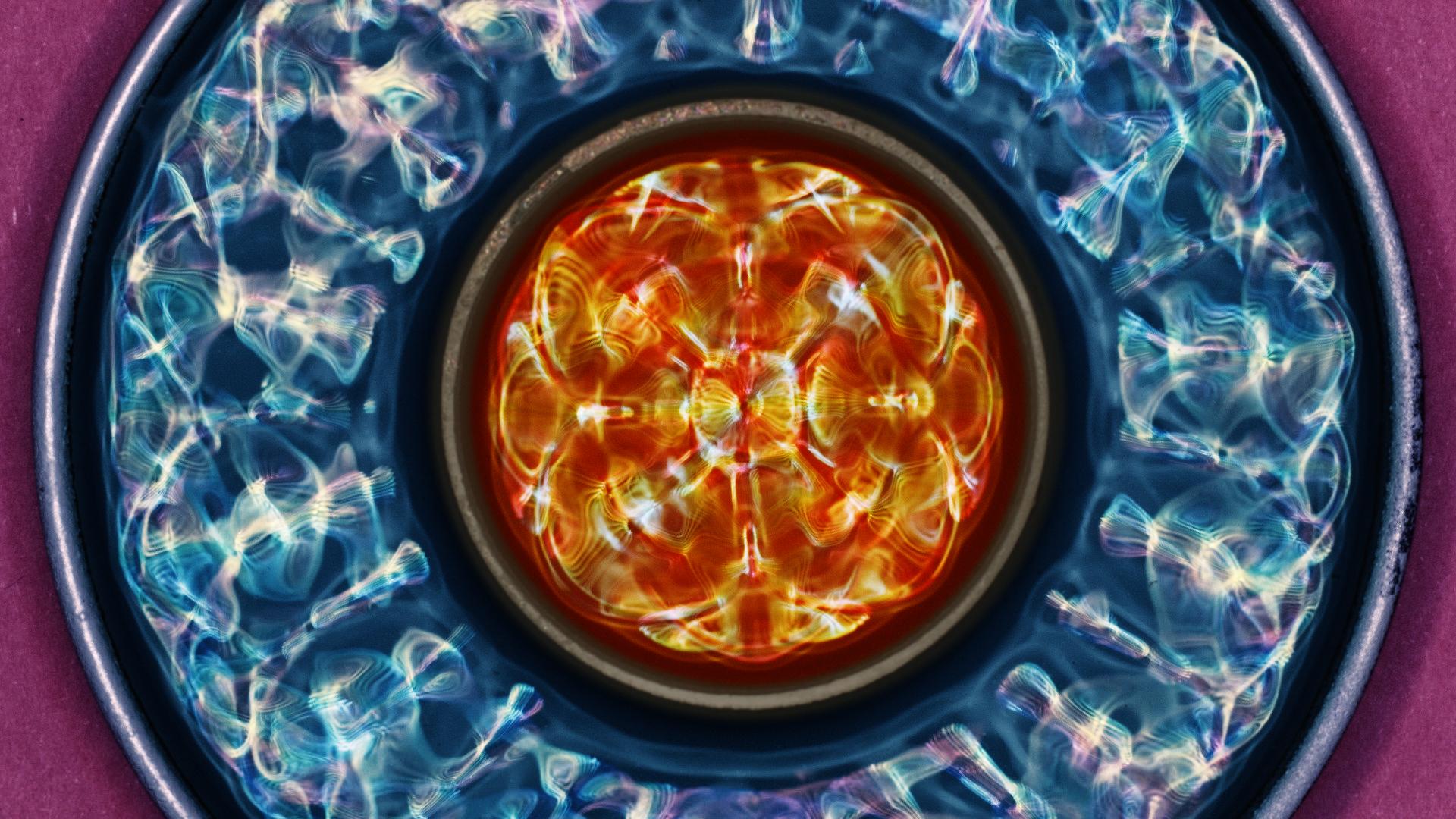
There are also contemporary devices designed to render sound patterns in fluid media. One of the more widely covered examples is John Stuart Reid's "CymaScope," described in mainstream coverage as a patented device intended to visualise sound (including a Scientific American podcast segment that discusses its hoped-for applications in distinguishing dolphin sounds). (Scientific American)
Organisations like SVARAM (Auroville) are useful as modern orientation points, showing how cymatics is taught and explored in contemporary sound-education and maker environments. Popular explainers such as SHIFT's "Ultimate Guide to Cymatics" can be cited in the "modern reinvention" section as examples of how the topic is translated for today's spiritual and wellness audiences (with all the expected blending of science language and symbolic language).
Modern wellness interpretation: what cymatics gives without pretending it "proves" everything
Cymatics is often used today as if it were decisive evidence for broad spiritual theses ("sound shapes reality"). You don't need to fight that impulse; you can refine it.
Cymatics is best understood as a disciplined metaphor supported by real physics: it shows that vibration can organise a medium into coherent form under stable conditions. That alone can shift how a reader relates to sound practices, less as vague ambience, more as structured experience.
It also encourages an artisan attitude toward sound in ritual and wellness contexts: pacing, repetition, timbre, room acoustics, dynamic range, and attention. These aren't medical claims; they're craft variables that shape perception and shared experience.
And it legitimises awe. The sensation that cymatic images are akin to snowflakes, each unique, each lawful can be honoured as a human response to pattern emerging from an invisible cause. That response is part of why cymatics has become a modern icon of "vibration made meaningful."
Cymatics endures because it is one of the clearest bridges we have between sound as a felt mystery and sound as a measurable phenomenon. Chladni made resonance visible with a method; Faraday expanded the domain to fluids and instability; Jenny turned visible vibration into an atlas of form; Lauterwasser brought the field into modern image culture with water as a living surface.
Vibration has structure, and that structure can be witnessed. That witness can change how people watch or listen.
Reference links
Smithsonian / Science Museum Group - Chladni plates
(Science Museum Group Collection)
Public Domain Review - Chladni Figures (historical context)
(The Public Domain Review)
UNSW (Joe Wolfe) - Chladni patterns for guitar plates (educational acoustics)
(phys.unsw.edu.au)
Colin Gough (University of Birmingham) The Violin: Chladni patterns, plates, shells and sounds" (technical discussion)
(violinacoustics)
Douady (1990) Experimental study of the Faraday instability" (fluid mechanics)
(damtp.cam.ac.uk)
PMC review example referencing Faraday's 1831 observation (Faraday instability context)
(PMC)
Hans Jenny - biography overview and publication timeline
(Wikipedia)
Floris Books - Cymatics (expanded edition, 2024; edited by Jeff Volk)
(florisbooks.co.uk)
Hans Jenny - Volume 1 PDF (historical primary text access)
(Monoskop)
Hans Jenny - Volume 2 PDF (historical primary text access)
(Monoskop)
Alexander Lauterwasser - Water Sound Images (publisher page)
(florisbooks.co.uk)
MIT Press / Leonardo review - Water Sound Images (2008 review)
(MIT Press Direct)
Google Books - Water Sound Images (bibliographic + author note)
(Google Books)
Archive.org - Water Sound Images (library listing)
(Internet Archive)
SVARAM (Auroville) - contemporary sound education context
SHIFT - Ultimate Guide to Cymatics

